Hand-painted in oil
About this Artwork
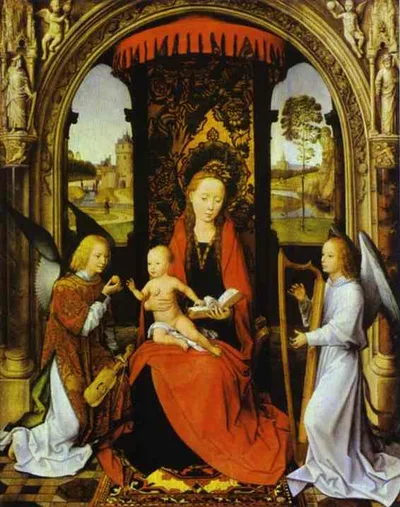
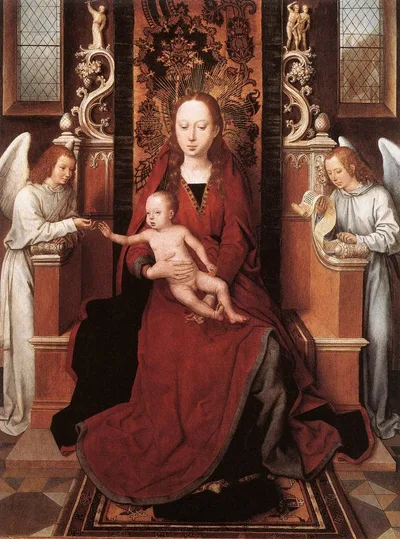
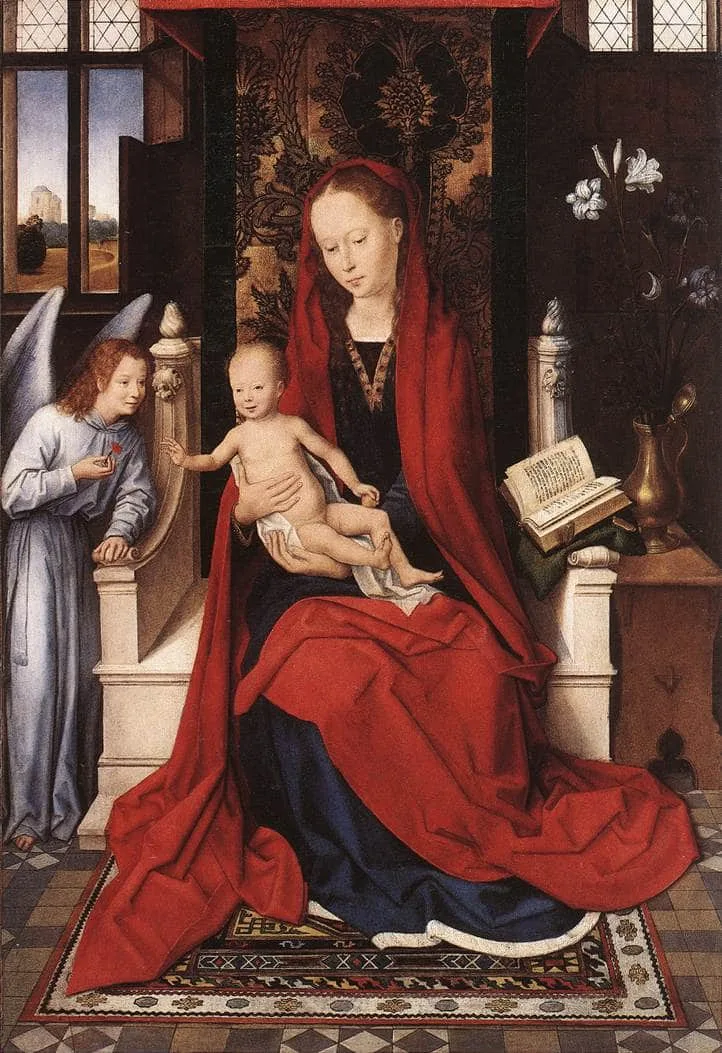
One angel, where the type usually has two
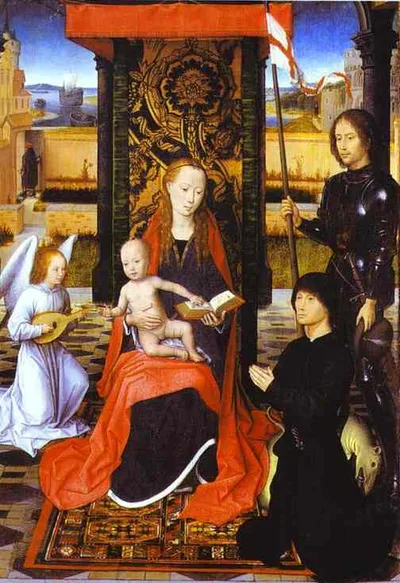
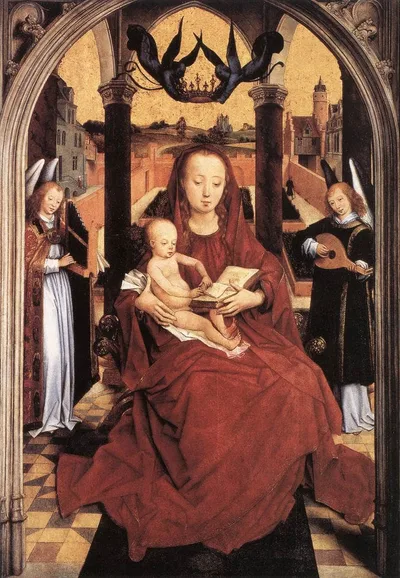
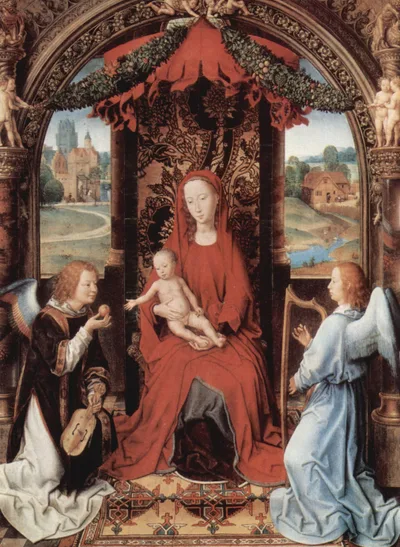
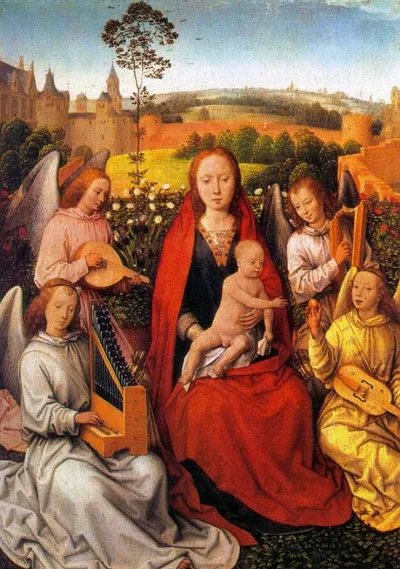
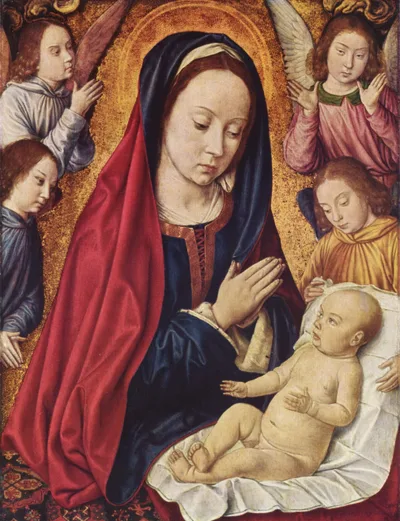
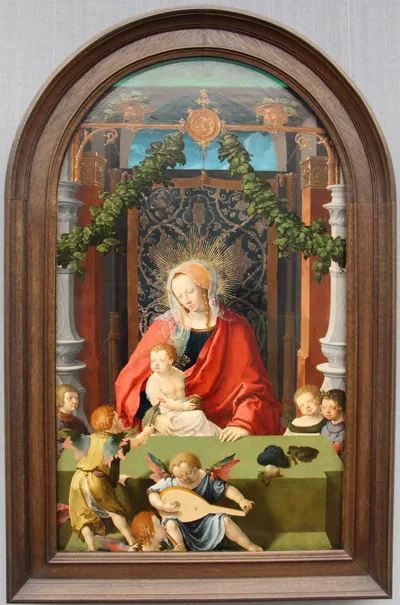
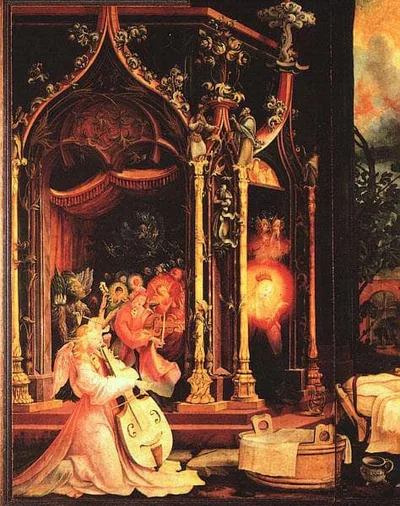
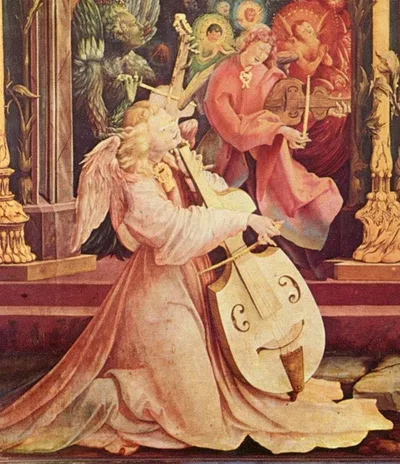
The enthroned Virgin is a symmetrical arrangement, and symmetry prefers even numbers. This title records a single angel. Within one artist's holdings the variation is easy to see: thirteen entries here are filed under Hans Memling, more than for any other artist, and eight of them name a Virgin or a Madonna together with an angel. The counts across those eight are not fixed — one, two, or an uncounted plural — and nothing in the titles suggests the number carries doctrinal weight. It is a compositional decision.
What the record holds
The catalogue dates the work to 1480 and gives Hans Memling, filed as Flemish and Northern Renaissance. It measures 66 x 46.5 cm, upright and small. The measured colour family is red. No location is recorded for this entry, so no collection is named here. The subject fields class it as female portraiture and as a religious subject.
What a single attendant cannot be
A lone angel beside a throne cannot be a chorus, and is not an archangel, since the title supplies no name. It occupies the position the tradition left blank: the ninth and lowest order, the plain angels, whose whole business was contact with human beings and who were consequently the only rank a painter had steady use for. Of the 224 entries on this site, none names a seraph or a cherub. All the visible work is done at the bottom of the ladder.
Sources
2 references- Hans Memling — Wikipedia
Hans Memling (also spelled Memlinc; c. 1430 – 11 August 1494) was a German-Flemish painter who worked in the tradition of Early Netherlandish painting. Born in the Middle Rhine region, he probably spent his childhood in Mainz. During his ap
- Memling, Hans, School of — Getty ULAN
Unknown artist