Hand-painted in oil
About this Artwork
Two subjects sharing a panel
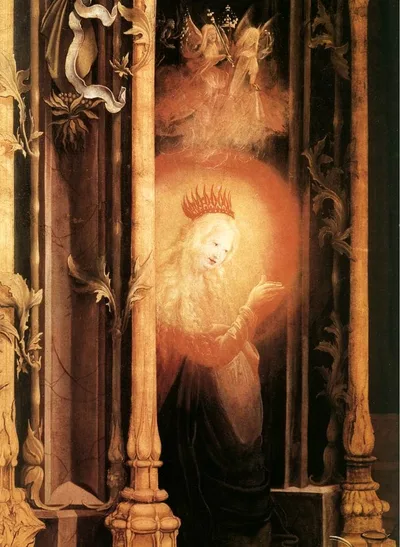
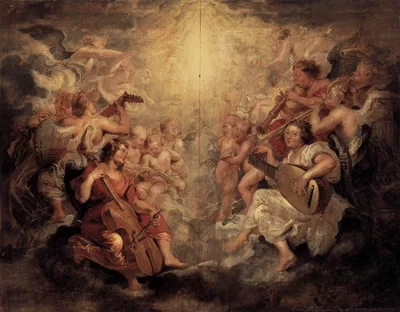
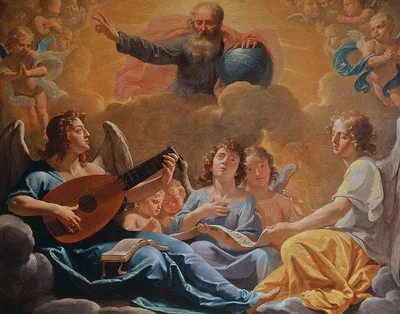
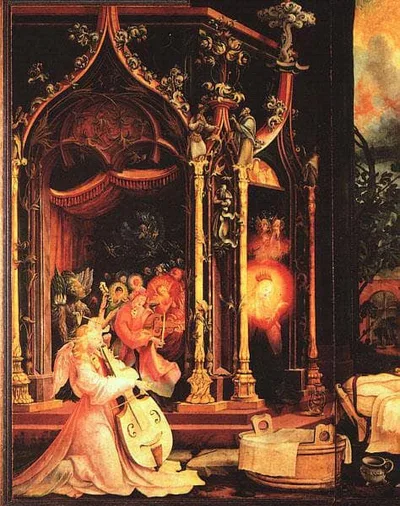
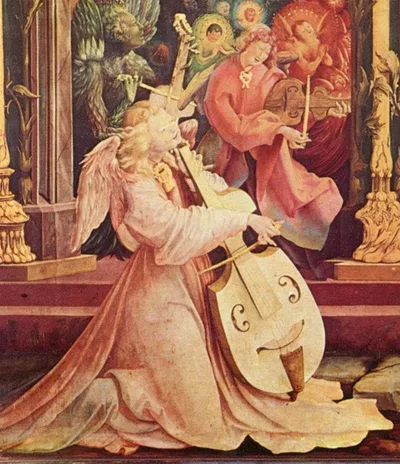
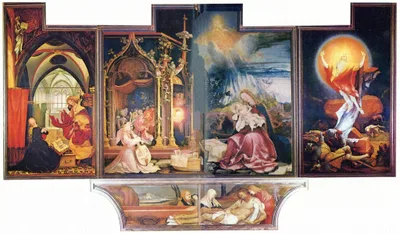
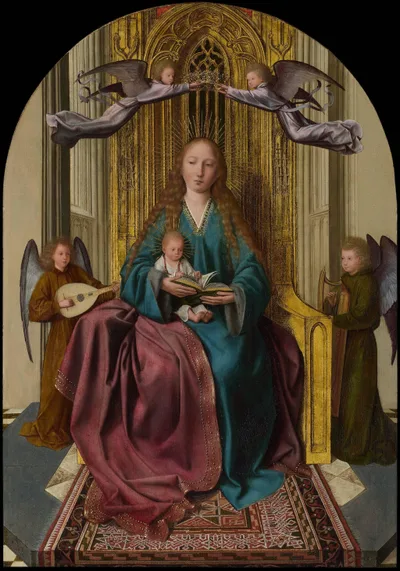
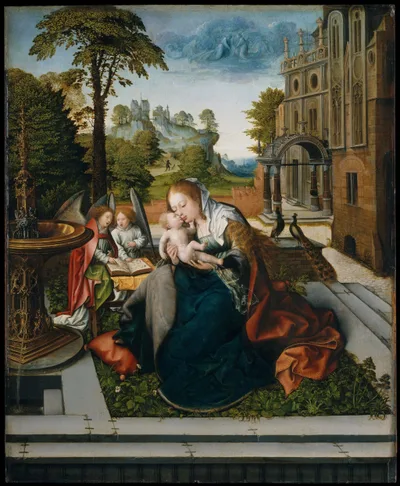
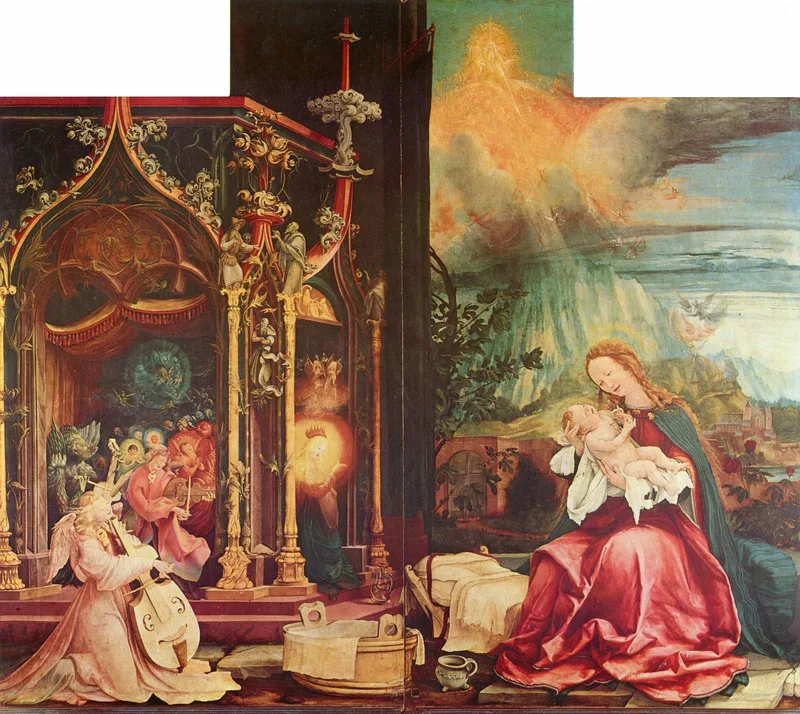
The recorded title joins a Nativity to a Concert of Angels and states that both occupy the central panel of an altarpiece. That is not a compound scene in the narrative sense — the birth and the chorus are not the same event — but a compound structure: one field of a picture given to a human episode and another to a heavenly one. Arrangements of this type make the hierarchy spatial. The angels are somewhere the human figures are not, and the boundary between the zones does the work a doctrine of orders does in a text.
What the record holds
The catalogue dates this entry to 1516 and gives Matthias Grünewald, filed as German and Northern Renaissance. The measured colour families are ochre and yellow. No location is recorded for this entry and no dimensions are recorded, so neither is stated here. The subject fields class the work as female portraiture and as a religious subject.
A chorus is not an order
The word concert supplies a count of "many" and nothing else. No angel in it is named, ranked or distinguished. Thirteen entries in this catalogue involve music and seven use the word concert; not one attaches a rank to a player. That is consistent with the scheme rather than a departure from it — the orders said to sing and praise are the ones no painter ever had to draw, because their office produces no action. What gets drawn is a band, and a band has no hierarchy.
Sources
3 references- Grünewald, Matthias — Getty ULAN
German painter and draftsman, ca. 1470-ca. 1530
- Matthias Grünewald — Wikipedia
Matthias Grünewald (c. 1470 – 31 August 1528; also known as Mathis Gothart Nithart) was a German Renaissance painter of religious works who ignored Renaissance classicism to continue the style of late medieval Central European art into the
- Isenheim Altarpiece — Wikipedia
The Isenheim Altarpiece is an altarpiece sculpted and painted by, respectively, the Germans Nikolaus Hagenauer and Matthias Grünewald in 1512–1516. It is on display at the Unterlinden Museum at Colmar, Alsace, in France. It is Grünewald's l