Hand-painted in oil
About this Artwork
Angels as custodians of objects
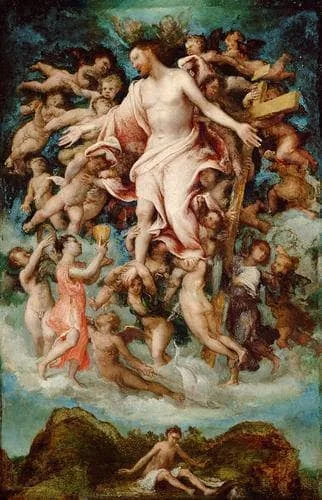
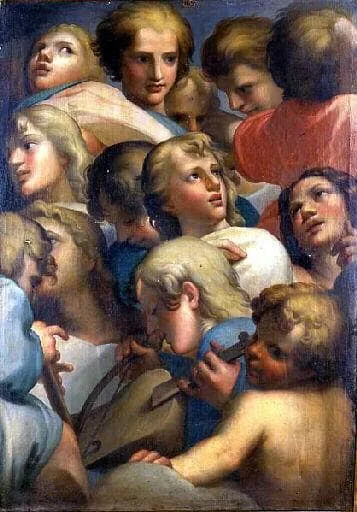
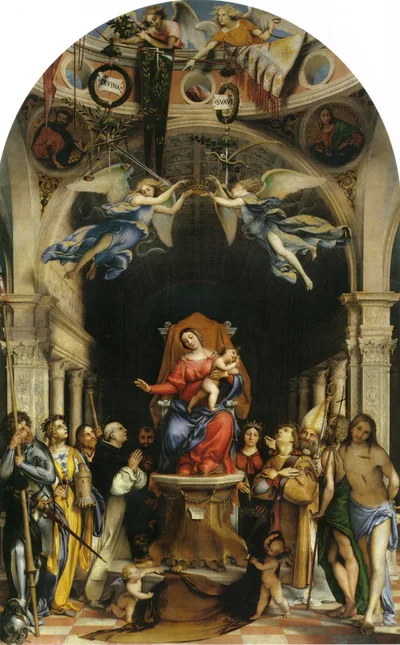
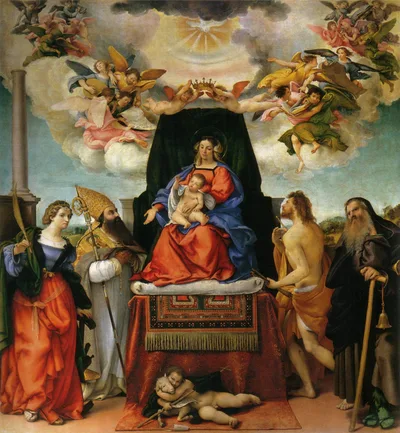
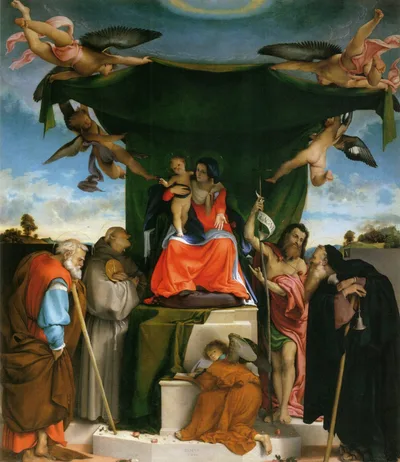
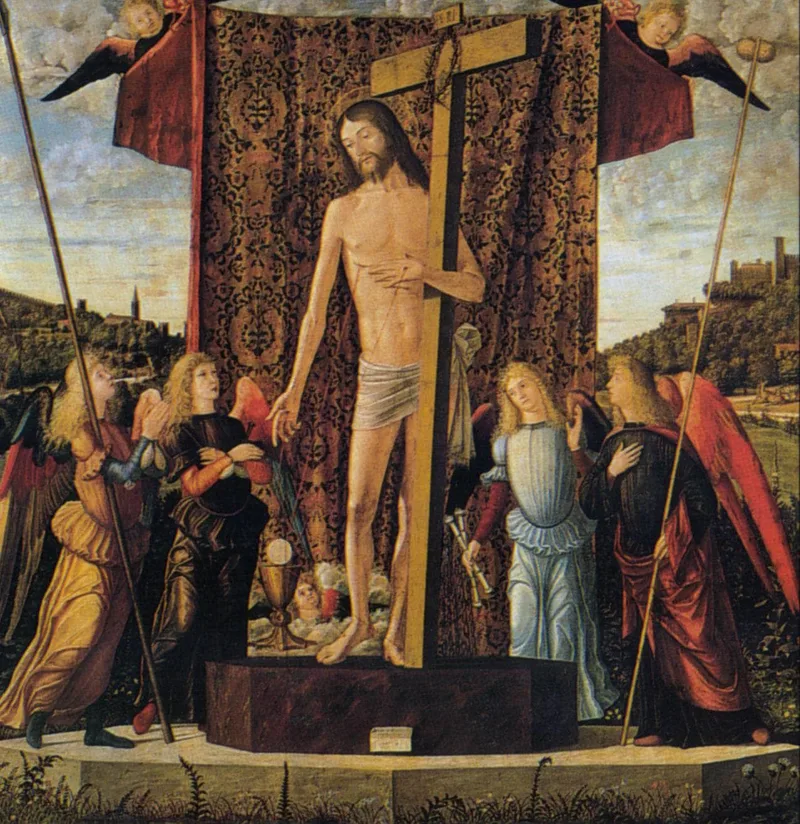
The instruments of the Passion are a fixed set of objects, and the tradition assigns their custody to angels. That is a real office — narrow, undramatic, and entirely defined by what is held. The angels who perform it are always plural and always unnamed, because the objects, not the bearers, carry the meaning. This title states the arrangement directly: Christ, the symbols, and angels around them.
What the record holds
The catalogue dates the work to 1496 and gives Vittore Carpaccio, a Italian painter, with High Renaissance as the style term. The recorded dimensions are 162 x 160 cm. The measured colour family is brown. No location is recorded.
A square panel, and a gap
The recorded dimensions are very nearly square, which is uncommon among the entries in this catalogue and is one of the few formal facts a record of this kind can supply. No location is on file, so where the panel is now is not something the catalogue can report. This is the only work by this painter among the 224 gathered here, and its style term is High Renaissance.
Sources
4 references- Carpaccio, Vittore — Getty ULAN
Italian painter and draftsman, ca. 1460-ca. 1526
- Vittore Carpaccio — Wikipedia
Vittore Carpaccio (UK: kar-PATCH-ee-oh, US: -PAHTCH-, Italian: [vitˈtoːre karˈpattʃo]; c. 1460/65 – c. 1525) was an Italian painter of the Venetian school who studied under Gentile Bellini. Carpaccio was largely influenced by the style of
- Christ between Four Angels — Wikidata
description: painting by Vittore Carpaccio; inception: 1496; dimensions: 162 × 163 cm; collection: Civic Museums and Gallery of History and Art
- Christ between Four Angels — Wikipedia
The Christ between Four Angels and the Instruments of the Passion is a painting by the Italian Renaissance master Vittore Carpaccio, executed in 1496 and now housed in the Civici musei e gallerie di storia e arte of Udine, Northern Italy. T