Hand-painted in oil
About this Artwork
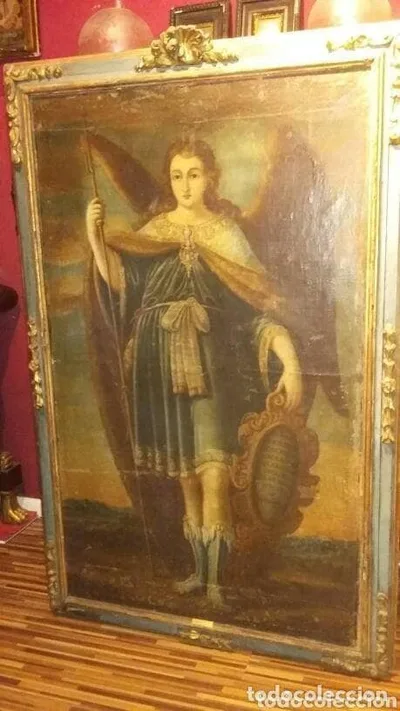
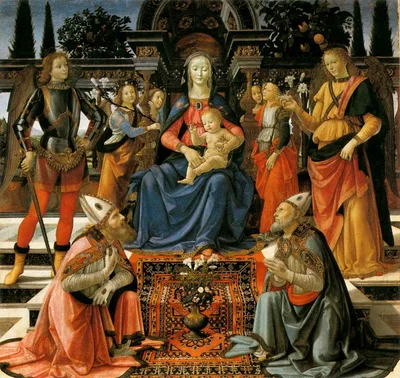
Angel or archangel, for the same figure
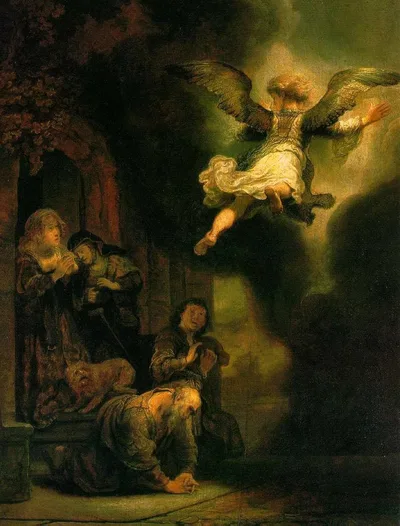
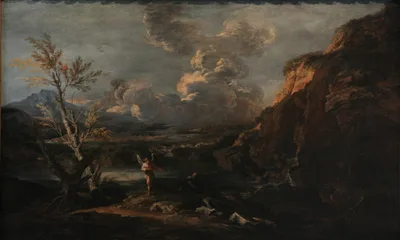
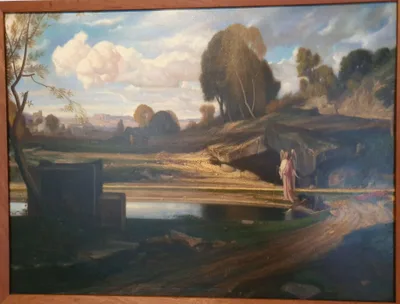
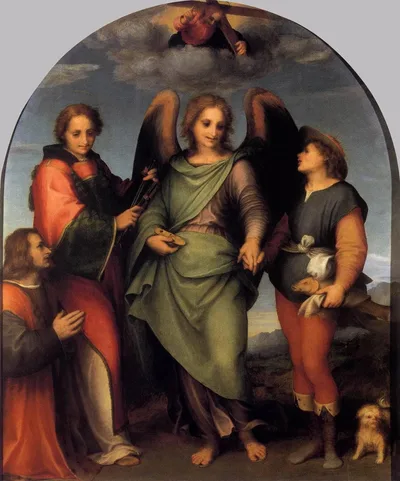
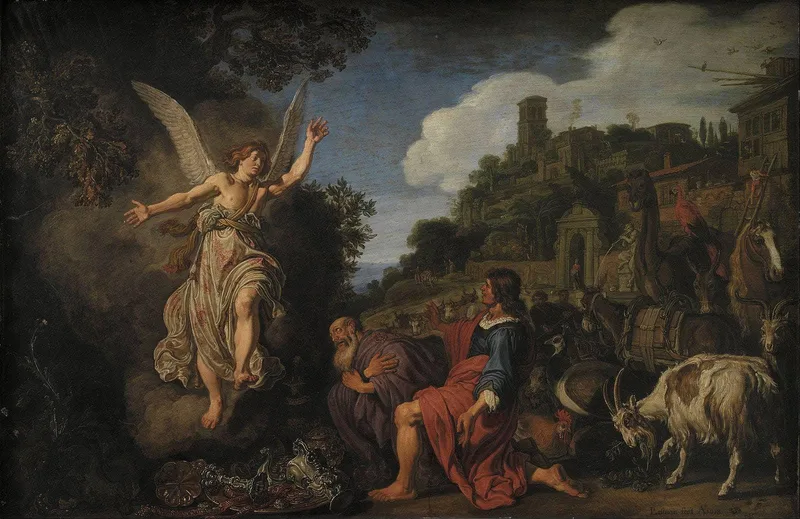
This title calls him the Angel Raphael. Two other entries in this catalogue call the same figure in the same story an archangel. Nothing about the being changes between the three records; only the word does. That inconsistency is not sloppiness. It reflects a tradition in which "angel" serves both as the name of the ninth and lowest order and as the general term for the whole host, so a named archangel can accurately be called an angel while a plain angel can never be called an archangel. The catalogue keeps each title as recorded and notes the asymmetry here.
What the record holds
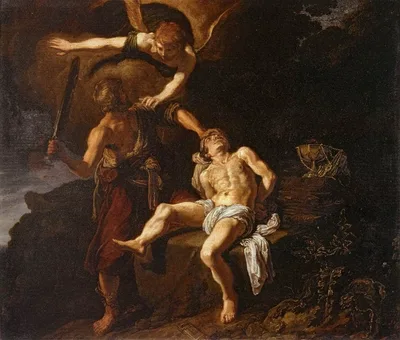
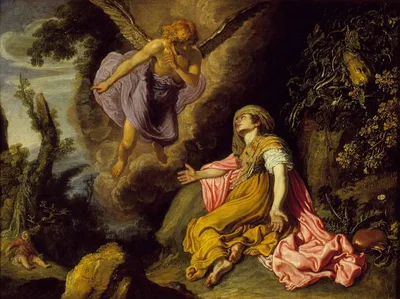
The catalogue dates the work to 1618 and gives Pieter Lastman, filed as Dutch, with two style terms, Baroque and Tenebrism. It measures 61.98 x 92.99 cm — horizontal, and recorded to two decimal places, which is unusual in this catalogue. The measured colour family is brown. No location is recorded for this entry, so no collection is named here.
The end of the escort
Raphael's function is accompaniment, and the leave-taking is where the function ends. Seven entries here record the Tobit story; this is one of two that put the departure in the title. What a parting scene supplies that the road scenes do not is a moment where rank becomes relevant at all — for the length of the journey the guide is simply a companion, and only in leaving does the question of what he is arise.
Sources
1 references- Lastman, Pieter — Getty ULAN
Dutch painter and draftsman, 1583-1633