
The Celestial Hierarchy
The Archangels: The One Choir Painters Gave a Face
Of the nine ranks, this collection holds one: the archangels, the only choir Western painting dressed, armed and gave a face.
16 angel paintings, dated 1471–1907. Painters with the most works here: Gerard David (2), Hans Memling (2) and Nicholas Roerich (2).
Browse the catalogue
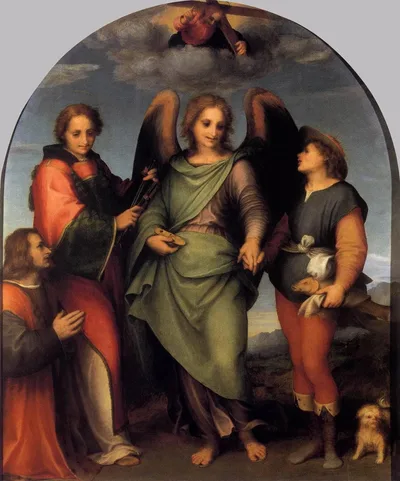 Archangel Raphael with Tobias, St. Lawrence and the Donor Leonardo di Lorenzo MorelliAndrea del SartoFrom$350
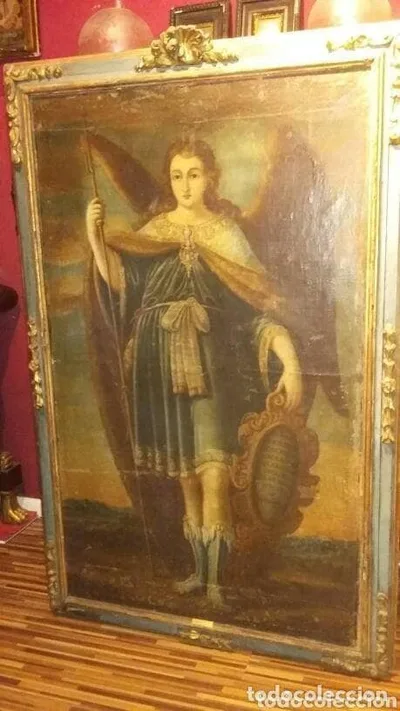 Saint Raphael the ArchangelBernabé de AyalaFrom$350
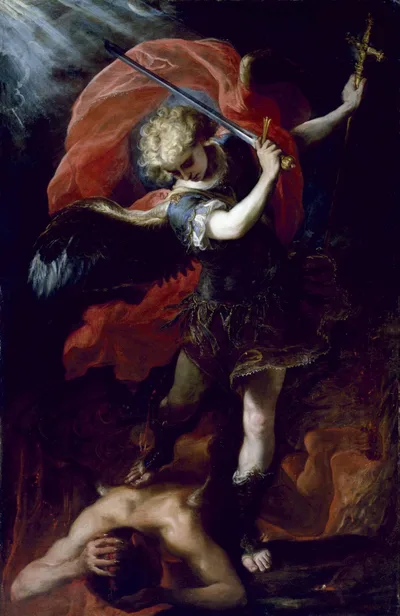 Saint Michael the ArchangelClaudio CoelloFrom$350
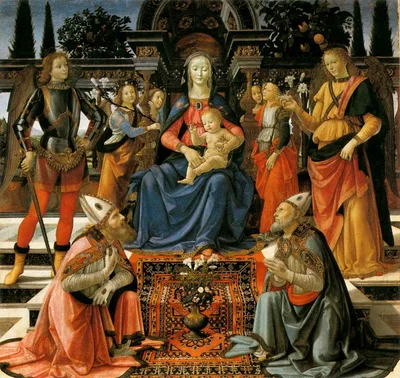 Madonna and Child Enthroned with Four Angels, the Archangels Michael and Raphael, and St. Gusto and St. ZenobiusDomenico GhirlandaioFrom$350
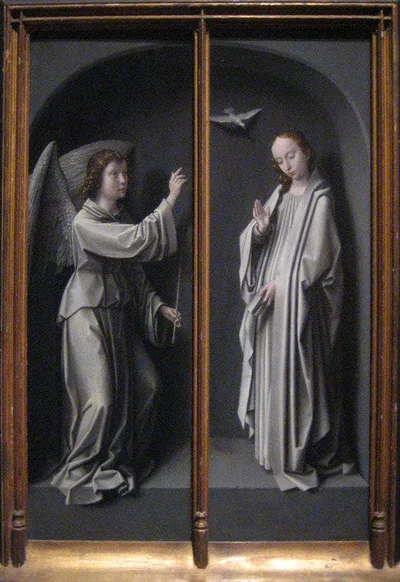 Archangel Gabriel and Virgin AnnunciateGerard DavidFrom$350
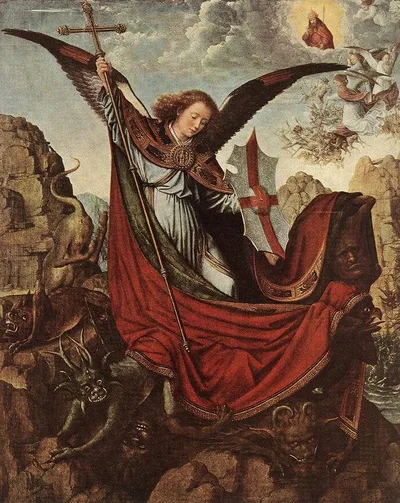 Altar of Archangel MichaelGerard DavidFrom$350
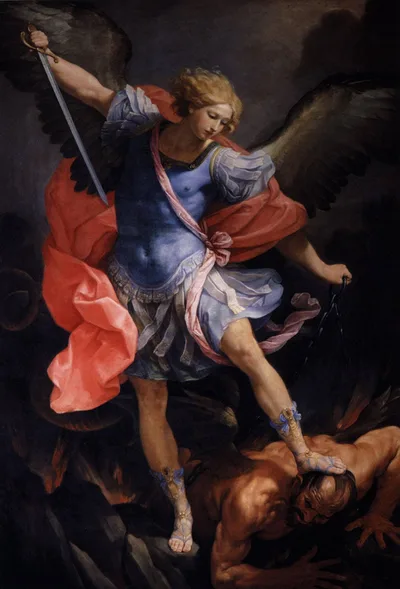 The Archangel Michael defeating SatanGuido ReniFrom$350
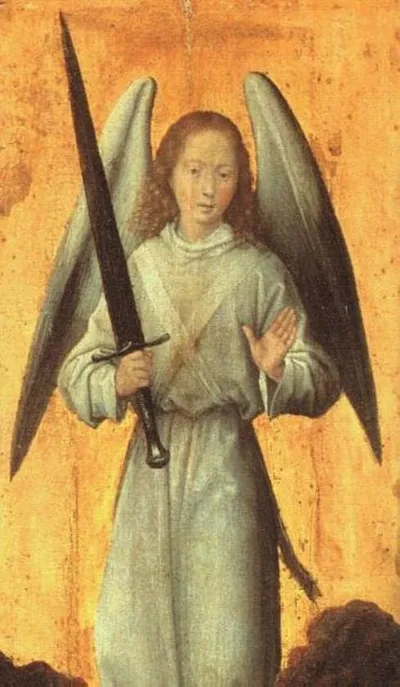 The Archangel MichaelHans MemlingFrom$350
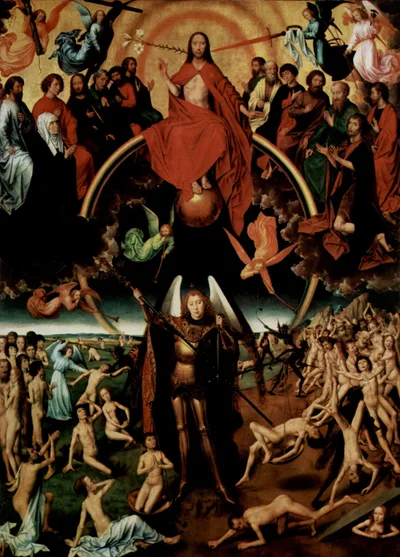 The Last Judgment triptych, central panel, Maiestas Domini with Archangel Michael weighing the soulsHans MemlingFrom$350
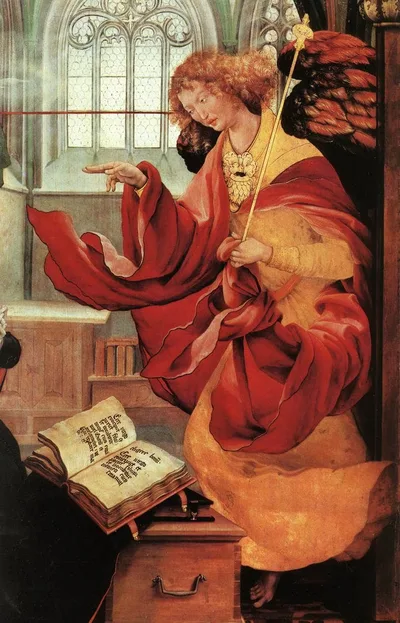 Archangel Gabriel (detail from the Annunciation from the Isenheim Altarpiece)Matthias GrünewaldFrom$350
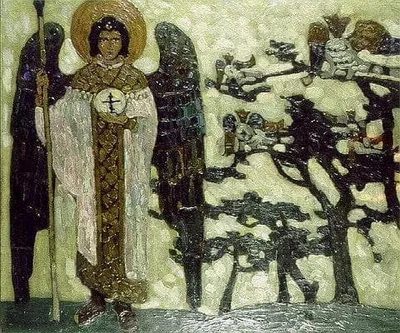 Archangel (Study to "Treasures of angels")Nicholas RoerichFrom$370
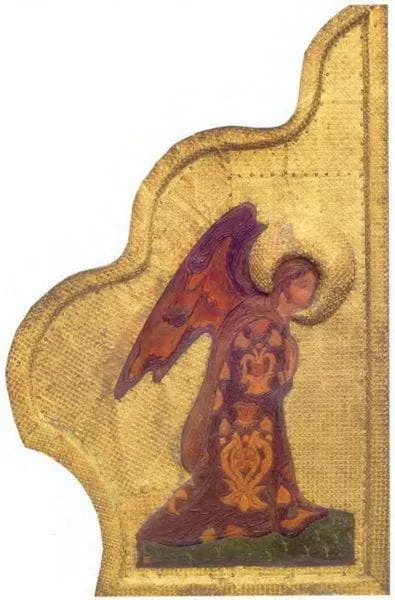 Annunciation. Archangel Gabriel.Nicholas RoerichFrom$350
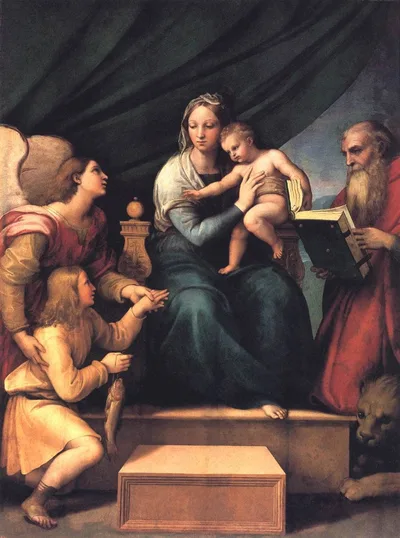 The Madonna of the Fish (The Madonna with the Archangel Gabriel and St. Jerome)RaphaelFrom$350
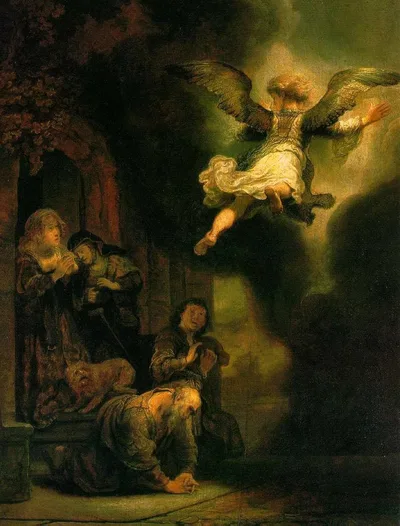 The Archangel Raphael Taking Leave of the Tobit FamilyRembrandtFrom$350
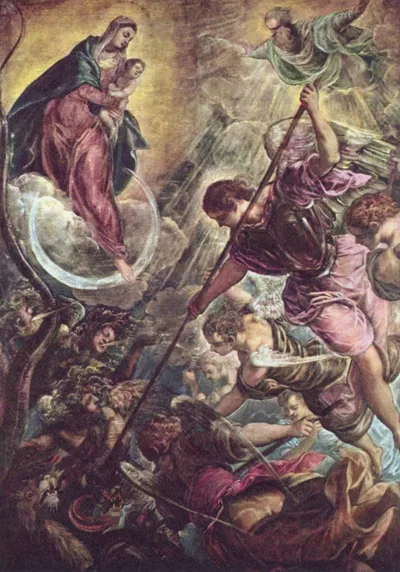 Battle of the Archangel Michael and the SatanTintorettoFrom$350
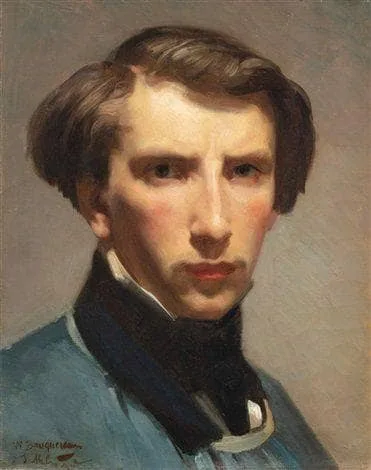 The Archangel Saint Michael, wearing a plumed helmet with the colors of AustriaWilliam-Adolphe BouguereauFrom$350
Of the nine ranks, painting gave a body to three, and the panel paintings that survive in oil narrow that to one. Seraphim are red and appear as heads inside six wings; cherubim are blue and usually reduced to a winged head. Both tend to occupy the border and the upper register rather than the centre, which is why a painting is rarely named after them — no work catalogued here is. Archangels are named: full figures, dressed and armed, the subject rather than the setting. Thrones, dominions, virtues, powers and principalities were named in sermons and inventories far more often than they were painted, and in this collection they are absent — which is itself the finding, not a gap in the catalogue.