Hand-painted in oil
About this Artwork
Three figures, no way to tell them apart
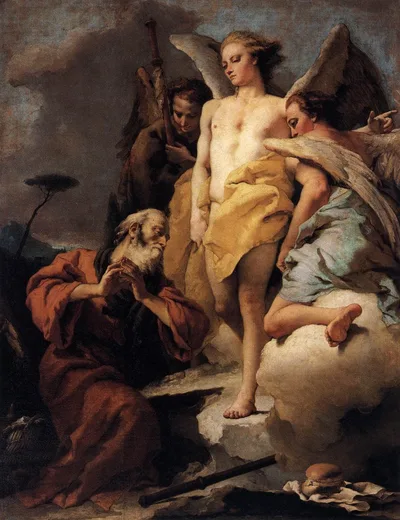
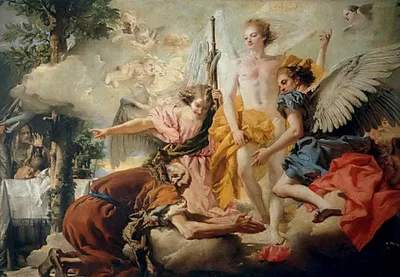
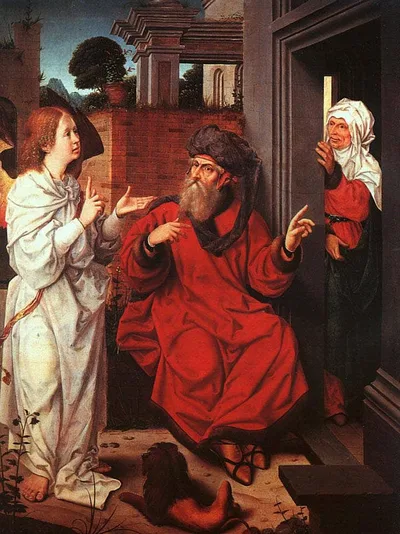
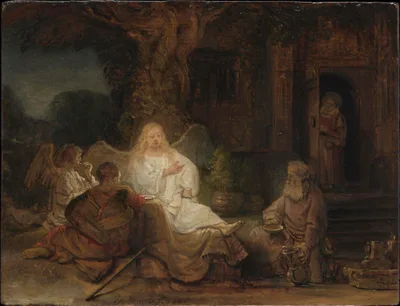
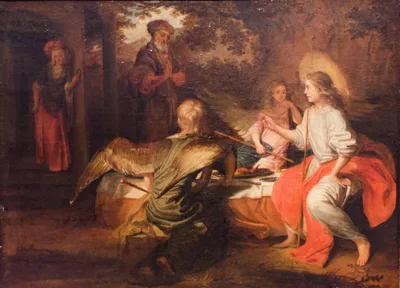
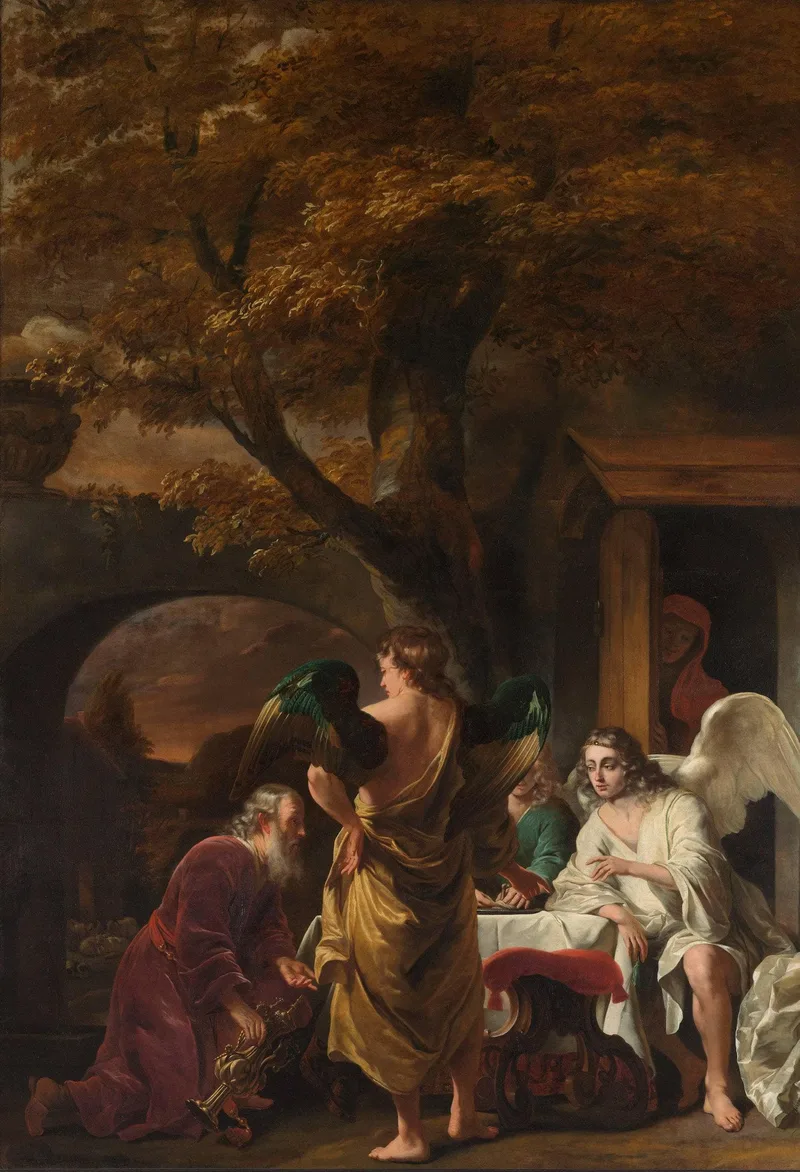
Most angelic subjects give the viewer something to sort: a named archangel with an attribute, a chorus at the top of a picture, a single attendant beside a saint. This one gives three of the same thing. The visitors at Mamre are, in the tradition, interchangeable. For a catalogue organised by hierarchy that is a limit case: the entry records a set, and a set has no internal order.
What the record holds
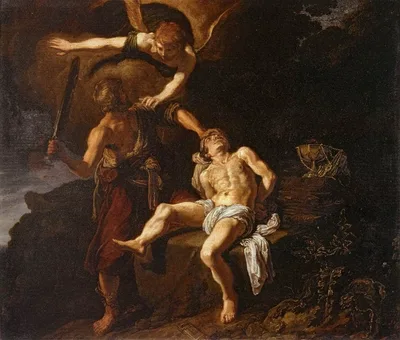
The catalogue dates the work to 1663 and gives Ferdinand Bol, filed as Dutch and Baroque. The measured colour family is brown, the commonest family here by a wide margin — 88 of 224 entries carry it. The recorded location is the Rijksmuseum in Amsterdam. No dimensions are recorded, so none are stated. Alongside the religious categories the record files the entry under mythology and fantasy, terms this catalogue applies across its religious holdings rather than as any judgement about the subject.
Why interchangeability is the point
Rank presumes difference. Eight titles here name Abraham, and where the visitors are three, no title in the group distinguishes one of them from the others. That silence is itself a statement about the host: below the named archangels the tradition supplied no way of telling one angel from another, and painting, asked to show three at once, did not invent one.
Sources
1 references- Bol, Ferdinand — Getty ULAN
Dutch painter, printmaker, 1616-1680