Hand-painted in oil
About this Artwork
The one human act the top of the hierarchy performs
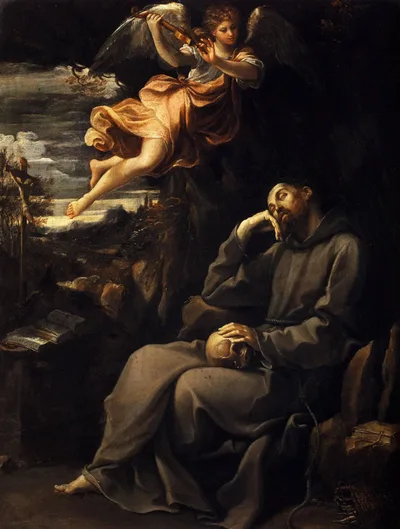
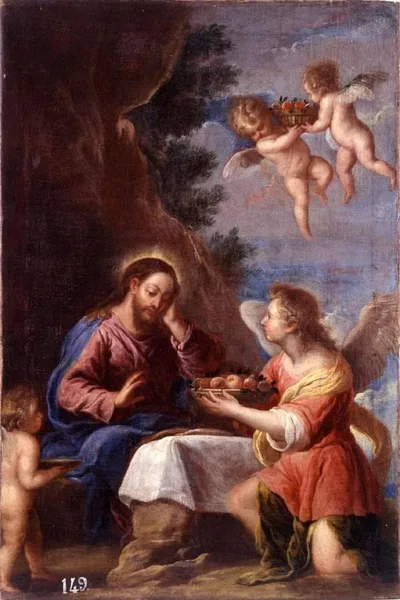
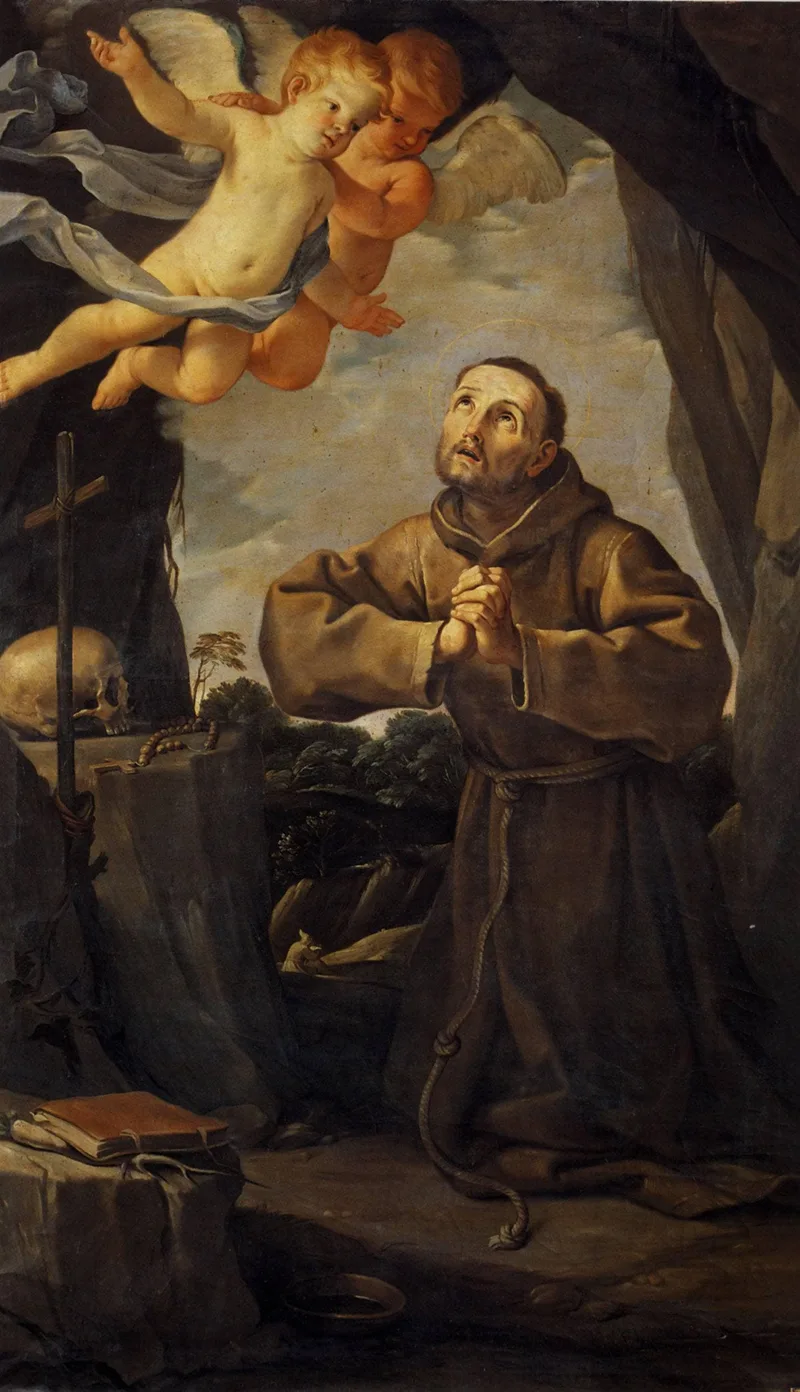
The first triad of the inherited scheme — seraphim, cherubim, thrones — was defined by contemplation rather than by errands: those orders were said to attend on God without being sent anywhere. Prayer is the human version of the same activity. A title that puts a praying saint together with angels therefore describes the one point at which a person and the summit of the angelic hierarchy are doing the same thing, even though the angels a picture of this type shows are, by every other sign, the errand-running kind.
What the record holds
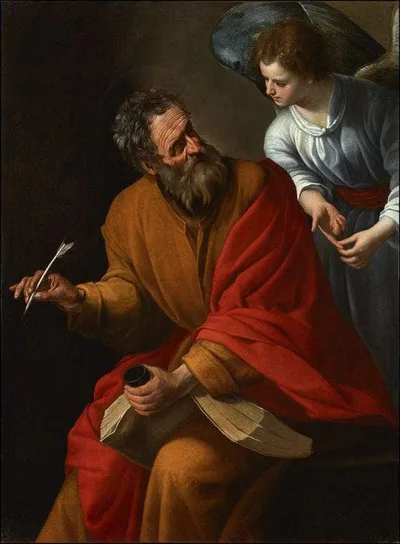
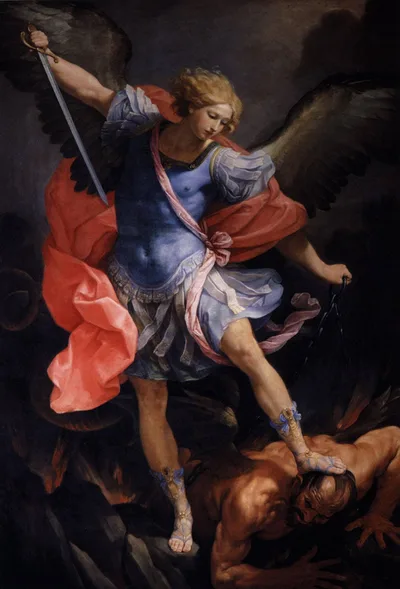
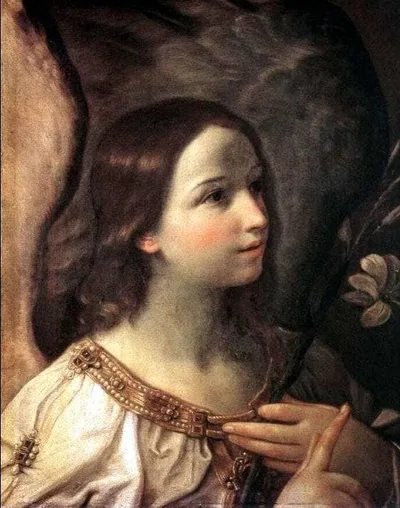
The catalogue dates the work to 1631 and gives Guido Reni, an Italian painter, filed under Baroque. It measures 196 x 117 cm, upright and at altar scale. The measured colour family is brown. No location is recorded for this entry, so no collection is named here. Reni accounts for six entries in this catalogue, spread across some four decades, and they include an archangel, an annunciation, a musician and this pair of attendants — a fair cross-section of what the tradition asked angels to do.
Two, and no more
The count is again all the title concedes about rank. Two angels attend; they are not named, not ordered, not distinguished from one another. Four titles in this catalogue name Francis, and in each the angels are present the same way — as company for a man who is doing something alone.
Sources
1 references- Reni, Guido — Getty ULAN
Italian painter, draftsman, 1575-1642