Hand-painted in oil
About this Artwork
The destroying office
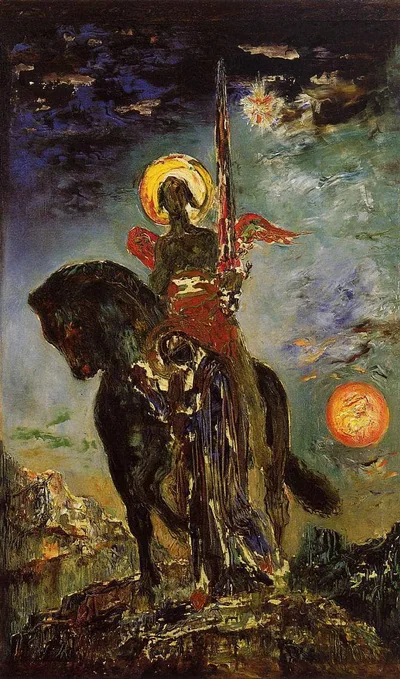
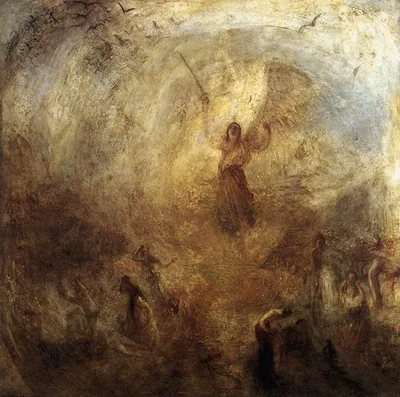
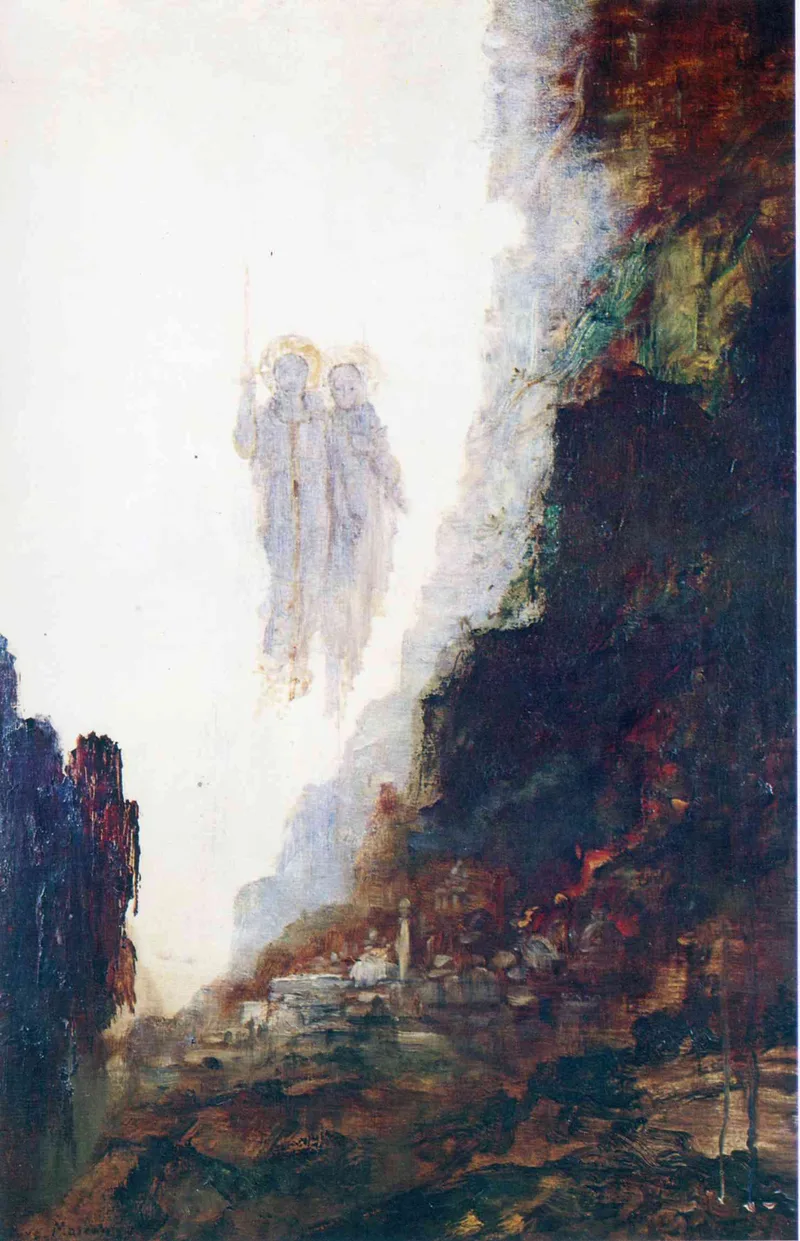
Angels in this catalogue mostly announce, escort or attend. The visitors named here do neither: the angels of Sodom belong to the episode of a city's destruction, and the function attached to them is judgment carried out. The title gives them in the plural and without names, which is the tradition's normal treatment of angels whose work is an event rather than a message.
What the record holds
The catalogue dates the work to 1890 and gives Gustave Moreau, a French painter, with the style term Symbolism. The measured colour family is neutral. The recorded location is the museum that carries the painter's own name, the Musée National Gustave Moreau in Paris. No dimensions appear in the record for this entry. Its subject categories include landscape, mountain and seascape alongside the religious filing — a set of terms that suggests the picture gives its angels a geography.
Why Symbolism kept the angel
The nineteenth century discarded most of the apparatus of the celestial hierarchy: nine ranks, choirs in tiers, the whole architecture of an altarpiece heaven. What it kept was the angel as a figure of scale and threat, unranked and unnamed. An angel of destruction fits that use exactly, because it requires no doctrine to be understood — only a city below and something above it.
Sources
3 references- Musée Gustave Moreau — Getty ULAN
French repository, Paris, contemporary
- Gustave Moreau — Wikipedia
Gustave Moreau (French: [ɡystav mɔʁo]; 6 April 1826 – 18 April 1898) was a French artist and an important figure in the Symbolist movement. Jean Cassou called him "the Symbolist painter par excellence". He was an influential forerunner of s
- Moreau, Gustave — Getty ULAN
French painter, 1826-1898